
Industry Analysis
AI, Telematics and the Software-Defined Construction Site
Machine control, computer vision and fleet analytics are converging into something closer to a site operating system than a set of features.
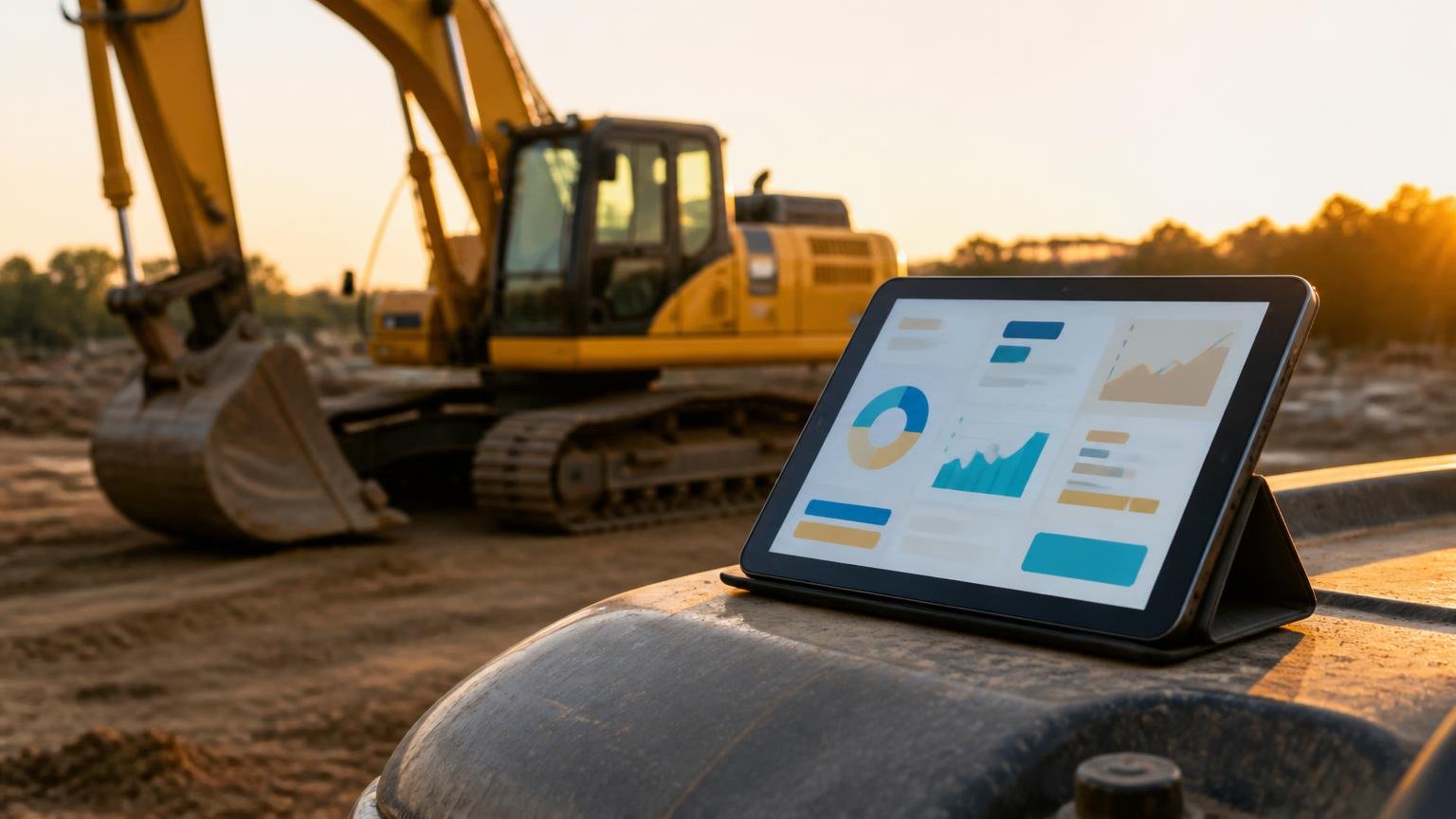
For most of the industry's history, productivity on a construction site was a function of machine capability and operator skill. Increasingly it is also a function of software.
This article is ISPT analysis of a visible industry direction. Adoption differs sharply by market, contractor size and machine age, and the observations here should not be read as universal practice.
What is changing
Several technologies that developed separately are now converging. Machine control and grade control automate blade and bucket positioning against a digital design. Computer vision supports obstacle detection, personnel safety and operational monitoring. Telematics and fleet analytics track utilisation, fuel or energy consumption and machine condition. Assistance systems reduce the skill gap between an experienced operator and a new one.
Manufacturers increasingly present these as integrated capability rather than as standalone options. Liebherr's 2026 communications, for example, have emphasised intelligent assistance systems, digital applications and connected construction and mining solutions.
Industry context
Two pressures are driving adoption. Skilled operator shortages are widely reported across developed markets, and assistance systems partly compensate. And contractors face tighter tolerances, documentation requirements and margin pressure, all of which reward measurable, repeatable execution.
What it means for manufacturers
Software changes the OEM's cost structure and competitive position. Development is continuous rather than model-cycle based, and support obligations extend across the machine's life. Manufacturers must build software engineering capability, update infrastructure and cybersecurity practice - competencies that were not previously central to equipment manufacturing.
It also raises a question of openness. Sites operate mixed fleets, and contractors resist running separate systems for each brand. Interoperability may become a purchasing criterion.
What it means for component and technology suppliers
Demand is growing for sensors, positioning hardware, cameras, connectivity modules, displays and control units. Suppliers in these categories are entering a market with different volumes, validation cycles and margin structures than traditional mechanical components. Some of the strongest positions will be held by technology companies with no history in off-highway equipment.
What it means for parts and the aftermarket
Three effects deserve attention. Electronic and sensing components join the replacement cycle, and they fail differently from mechanical parts - often intermittently and with diagnostic complexity. Software becomes a service item, with updates, licences and configuration forming part of the support relationship. And data-driven maintenance scheduling changes how parts demand is anticipated.
Workshops without diagnostic capability will find themselves excluded from a growing share of service work. That is a capability investment decision facing every independent service provider and parts distributor.
What to watch next
Watch for interoperability standards and open data initiatives, the pricing model for software features, adoption rates among mid-sized contractors, and whether independent service providers gain access to diagnostic tools.
Editorial view
The construction site is becoming a managed digital environment, and equipment is becoming one component of it. That reframes competition: capability is no longer only what the machine can do, but what the operator, the site and the service network can do with the data it produces.
**Sources: Official company releases, government publications, industry associations and verified business media. This article is independently written by ISPT based on publicly available information and cited sources.**
Sources & references
- Liebherr official communications · Company announcement · 2026-09
Industry Briefings
India Brief and Global Brief, straight to your inbox
Daily intelligence on manufacturers, importers, parts, policy and markets for senior industry professionals.