
Technology / Market Analysis
Electrification and the New Spare Parts Opportunity
The parts basket is changing composition, not shrinking. Understanding what remains is as commercially important as understanding what is new.
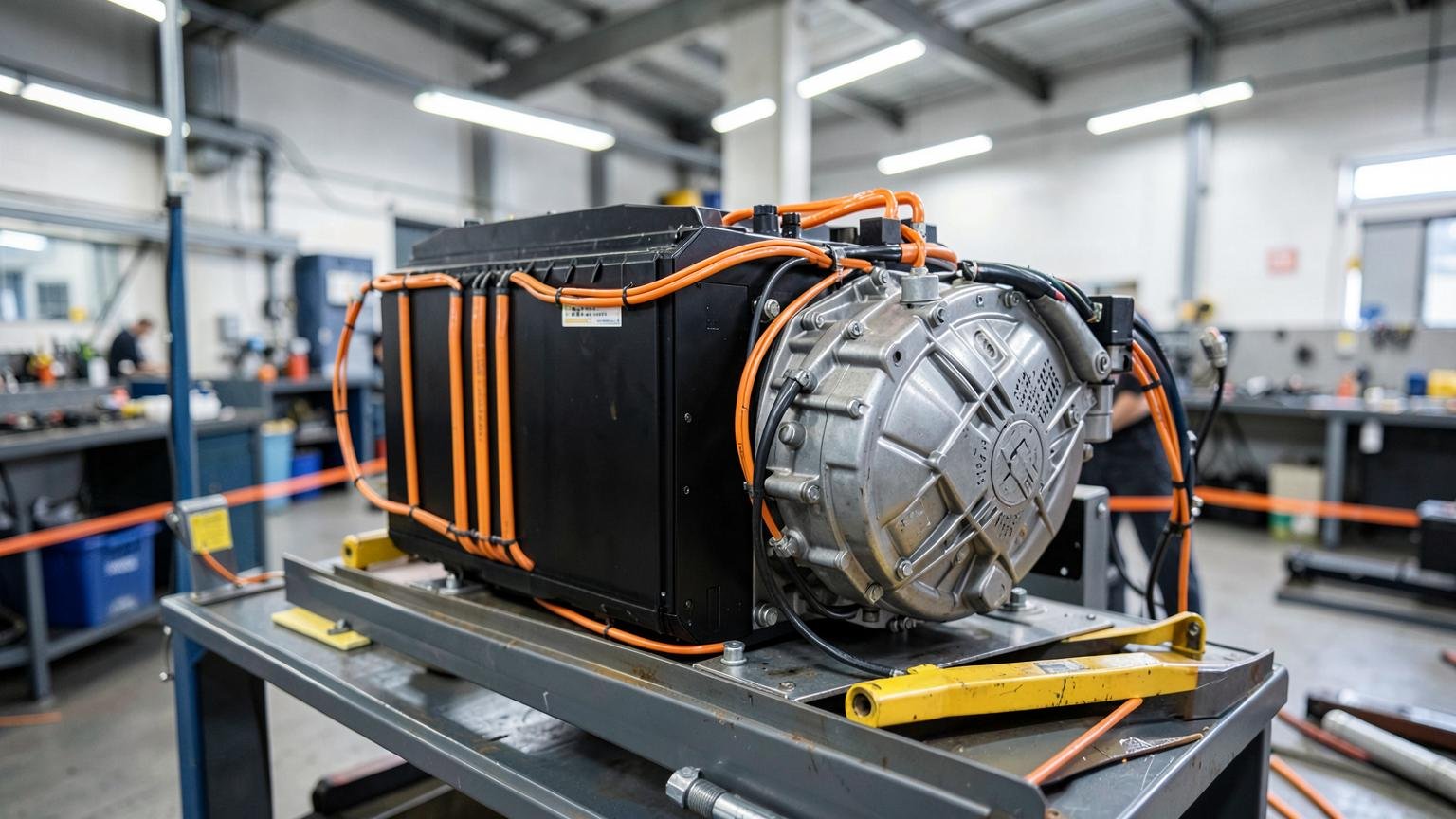
Electrification is frequently discussed as a threat to the spare-parts industry. That reading is too simple. The parts business is changing composition, and the transition will be long enough for both technologies to be commercially significant simultaneously.
What is changing
Battery-electric machines have moved beyond compact categories. Volvo Construction Equipment announced in April 2026 that it had begun serial production of the A30 Electric and A40 Electric articulated haulers - machines in a size class where energy demand is substantial. ISPT reports this as a company announcement.
Serial production matters to the parts industry because it forces the creation of a supply and service infrastructure: replacement modules, diagnostic tooling, trained technicians and documented procedures.
What declines
The components tied directly to combustion reduce in volume over time: fuel injection systems, fuel filters and pumps, exhaust and after-treatment components, engine oil filtration, turbochargers, and a range of engine-specific mechanical parts.
This decline is gradual. Diesel machines being sold today will operate for a decade or more, and the installed base is overwhelmingly diesel. Suppliers in these categories face a long plateau, not a cliff - but they should plan for the direction.
What grows
The emerging categories are different in character. Battery modules and management systems, electric traction and implement motors, inverters and power electronics, high-voltage cabling, connectors and contactors, thermal management components including pumps, chillers and cooling circuits, and a wider population of sensors.
Software becomes a service line: calibration, updates, diagnostics and configuration.
What stays the same
This is the part most often overlooked. Undercarriage, tyres, ground engaging tools, structural components, hydraulic cylinders and hoses, bearings, brakes, cab components, glass and filtration for hydraulic and cooling circuits are largely unchanged by the powertrain. In many machine categories these represent the majority of aftermarket volume.
An electric excavator still digs, still wears its undercarriage, and still needs hydraulic maintenance.
What it means for manufacturers and suppliers
For established parts manufacturers, the practical strategy is portfolio management: protect and harvest combustion-related lines, invest in the mechanical categories that persist, and evaluate selective entry into thermal management, connectors or cooling components where existing capability transfers.
Entry into battery cells or power electronics is a different industry with different capital requirements, and it is not the natural adjacency it may appear to be.
What it means for importers and distributors
Distributors will need to serve two fleets in parallel for many years. That means dual inventory strategies, technician training in high-voltage safety, and diagnostic tooling for both architectures. The transition period, not the end state, is the operational challenge.
What to watch next
Watch fleet adoption rates by machine category, the emergence of independent suppliers in high-voltage components, battery replacement and second-life economics, and the development of high-voltage service certification standards.
Editorial view
Electrification does not remove the aftermarket; it redistributes it. The suppliers at risk are not those selling mechanical parts, but those whose entire portfolio is tied to combustion and who treat the transition as a distant concern.
**Sources: Official company releases, government publications, industry associations and verified business media. This article is independently written by ISPT based on publicly available information and cited sources.**
Sources & references
- Volvo Construction Equipment official announcement · Company announcement · 2026-04-09
Industry Briefings
India Brief and Global Brief, straight to your inbox
Daily intelligence on manufacturers, importers, parts, policy and markets for senior industry professionals.