Flagship Editorial Analysis
The Future of the Global Heavy Equipment Aftermarket
The flagship ISPT international analysis: the aftermarket is becoming a combination of data, parts, service, supply chain and customer relationship - not a parts counter.
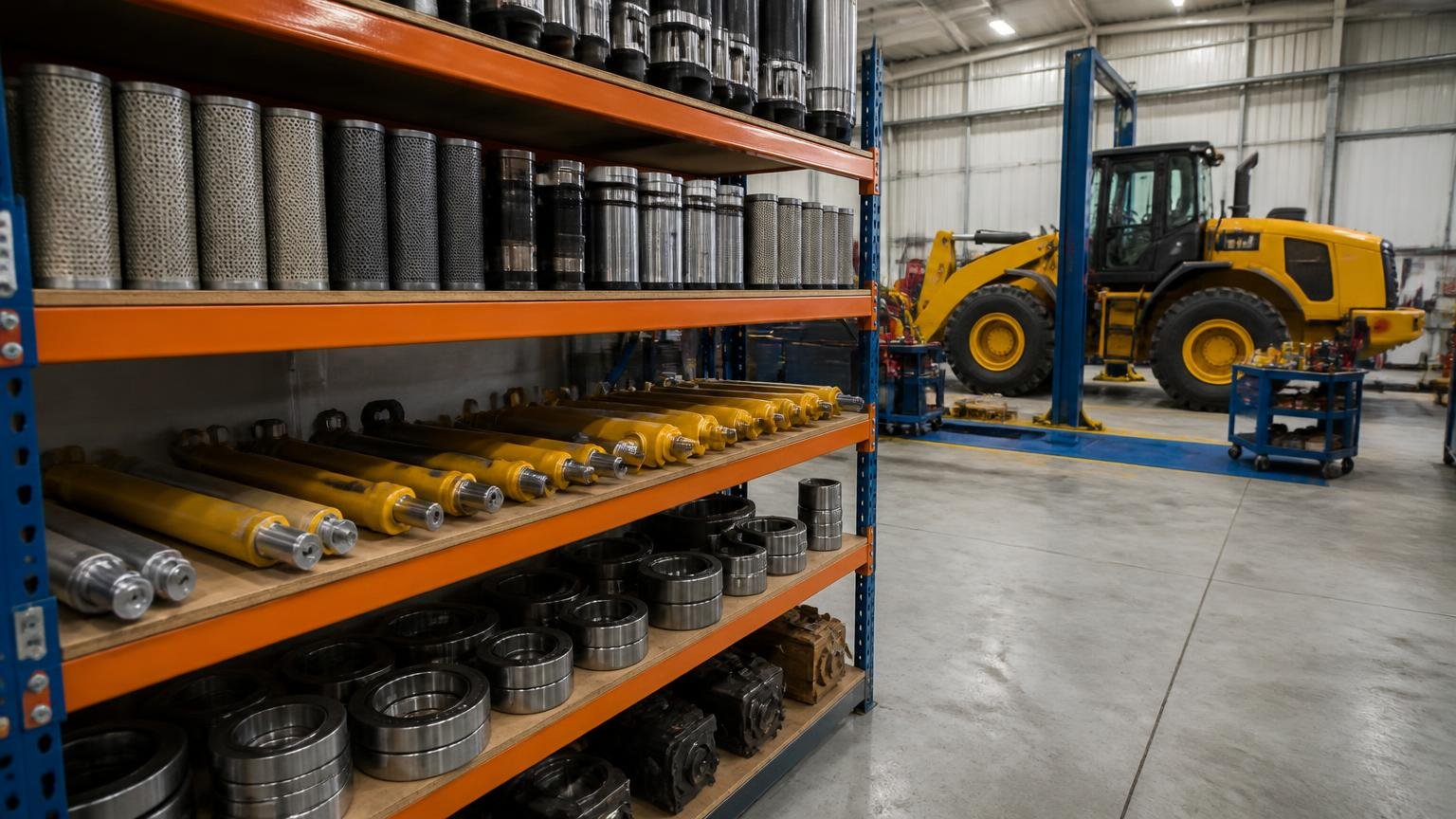
The heavy equipment aftermarket has historically been a straightforward business. A part fails, an owner orders a replacement, a supplier delivers it, and price and availability decide the sale. Several forces now acting together are changing that structure.
The forces in play
Machine demand remains substantial. Caterpillar reported second-quarter 2026 sales and revenues of $20.5 billion, up 24% year over year, with strong order rates and a growing backlog. Every machine sold in this cycle enters an installed base that will consume parts for a decade or more.
Machines are becoming connected, and condition data increasingly informs when maintenance happens. Electrification has moved into serial production in larger machine classes, changing the composition of the parts basket. And supply chains are being reconfigured around resilience as much as cost, with tariffs and regional divergence affecting availability.
What this adds up to
Five capabilities are becoming the basis of competition in the aftermarket.
**Data.** Knowing the condition of a machine converts parts supply from reaction to planning. Whoever holds that visibility can position inventory, schedule service and secure the order before it is tendered.
**Parts.** Manufacturing capability and quality remain fundamental. A part that fails early destroys the relationship regardless of how well it was sold.
**Service.** As machines become more electronic and, in some categories, electrified, the ability to diagnose and repair becomes a barrier to entry. Parts without service capability is an increasingly narrow business.
**Supply chain.** Availability has become a strategic differentiator. Regional stock, dual sourcing and reliable lead times matter more than incremental price advantage to any operator counting downtime cost.
**Customer relationship.** Uptime agreements, maintenance contracts and fleet-level partnerships are replacing transactional parts sales in the larger accounts, particularly in mining.
What it means for manufacturers
OEMs hold advantages in data and network, but not automatically in cost or agility. Their exposure is availability: a genuine part unavailable for weeks invites substitution, and once a fleet operator qualifies an alternative supplier, that decision tends to persist.
What it means for importers and distributors
Distributors sit closest to the customer and hold the most accurate picture of real-world failure. That knowledge is an asset that manufacturers cannot easily replicate. The distributors likely to prosper are those adding technical service, diagnostics and inventory intelligence rather than competing on landed cost.
What it means for parts manufacturers
For independent and emerging parts manufacturers - including a growing number in India - the requirements are consistent: OEM-grade quality with documentation, credible certification, clean catalogue and cross-reference data, and protection against counterfeit substitution. Digital discoverability is becoming as important as manufacturing capability, because a part that cannot be identified will not be bought.
What to watch next
Watch data-access and right-to-repair developments, the growth of uptime-based commercial models, regional parts manufacturing investment, and adoption of digital parts identification.
Editorial conclusion
The aftermarket of the next decade will not be defined by who sells the cheapest replacement part. It will be defined by who knows the machine, who can supply the part reliably, who can fit it competently, and who the customer trusts to keep the fleet working.
That is a higher standard than the industry has previously been held to - and a considerably larger opportunity for the businesses that meet it.
**Sources: Official company releases, government publications, industry associations and verified business media. This article is independently written by ISPT based on publicly available information and cited sources.**
Sources & references
- Caterpillar Inc. official results · Company announcement · 2026-08-04
- Volvo Construction Equipment official announcement · Company announcement · 2026-04-09
Industry Briefings
India Brief and Global Brief, straight to your inbox
Daily intelligence on manufacturers, importers, parts, policy and markets for senior industry professionals.