Industry Analysis
Why India's CEV Stage V Transition Could Become an Export Advantage
Tighter emission norms raised equipment prices at home. They also moved Indian machines closer to the specification regulated export markets expect.
Emission regulation is usually discussed as a cost event. For India's construction equipment sector, the CEV Stage V transition is better understood as a technology event with a cost consequence.
What changed
Tighter emission standards for construction equipment vehicles required engine, after-treatment and electronic upgrades across most machine categories. Industry commentary reported through 2026, including analysis referenced by ICRA and covered in business media, links the transition to higher equipment prices and to a period of subdued domestic demand. FY26 domestic sales declined 6.7% to 113,229 units, according to figures reported by Business Standard, in a year that also carried the cost of transition.
Industry context
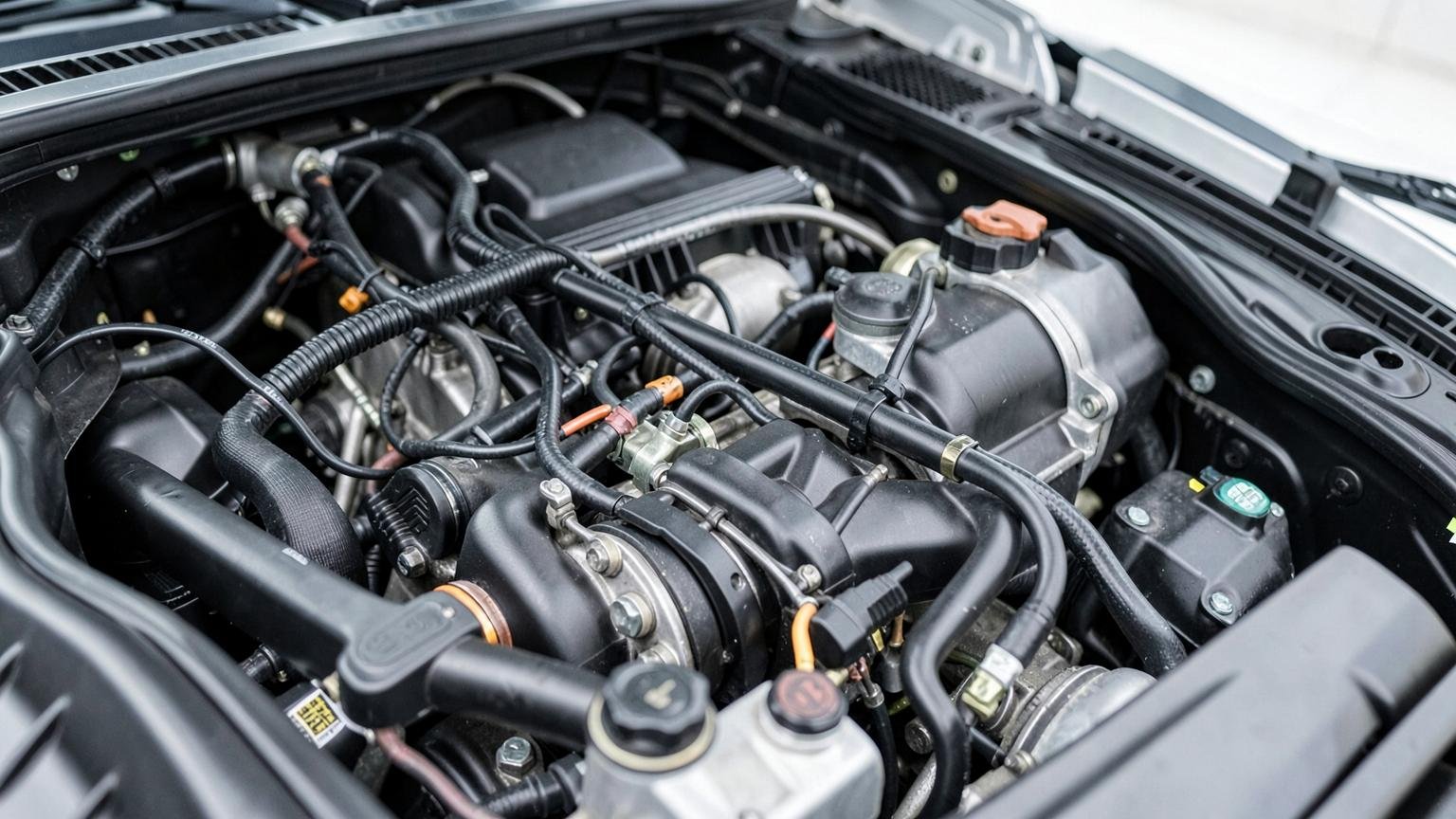
Meeting stricter norms is not a matter of changing an engine alone. It requires after-treatment systems, additional sensors, more capable electronic control units, revised cooling and packaging, and software calibration. Each of those requirements raises the electronic and hydraulic content of the machine - precisely the content that India currently imports in significant volume.
That is the paradox of the transition: it increases both technical sophistication and, in the short term, import dependence.
What it means for manufacturers
The commercial pain of the transition is largely behind the industry; the strategic benefit is ahead of it. Machines engineered to tighter emission standards face fewer barriers in regulated markets and can be adapted for export with less re-engineering than earlier-generation products.
For OEMs, the practical question is whether to treat the emission platform as a compliance exercise or as the basis of an export product line. The second requires investment in documentation, certification and market-specific validation that compliance alone does not.
What it means for importers and component suppliers
Demand for after-treatment components, sensors, ECUs and precision fuel-system parts rose with the transition. Much of that demand is currently met by imports and by global suppliers manufacturing in India. Suppliers with calibration and diagnostic capability, not simply parts availability, hold the stronger position.
What it means for parts and the aftermarket
A more electronically managed machine changes aftermarket economics. Diagnostics become a service in their own right. Sensor and after-treatment components enter the replacement cycle. Counterfeit or non-specification parts carry higher consequences, because a substandard sensor can put a machine into a derated state rather than simply wearing out early.
Workshops and dealers will need diagnostic tooling and trained technicians. That requirement is a barrier for small independent workshops and an opportunity for organised service networks and parts distributors who invest in capability.
What to watch next
Watch whether Indian component manufacturers begin supplying emission-related systems rather than only mechanical parts, whether OEMs formalise export variants built on the new platform, and how aftermarket service networks adapt to electronically managed machines.
Editorial view
Regulation imposed a cost on Indian manufacturers that they did not choose. The industry now has the option of converting that cost into export capability. Whether it does so is a matter of commercial intent rather than regulation.
**Sources: Official company releases, government publications, industry associations and verified business media. This article is independently written by ISPT based on publicly available information and cited sources.**
Sources & references
- Business Standard · Business publication · 2026-09-01
Industry Briefings
India Brief and Global Brief, straight to your inbox
Daily intelligence on manufacturers, importers, parts, policy and markets for senior industry professionals.