
Policy Analysis
India's Rs 14,300-Crore Construction & Infrastructure Equipment Scheme: What Manufacturers Need to Watch
The scheme has been announced and funded on paper. Its industrial effect will depend entirely on operational detail that has yet to be settled.
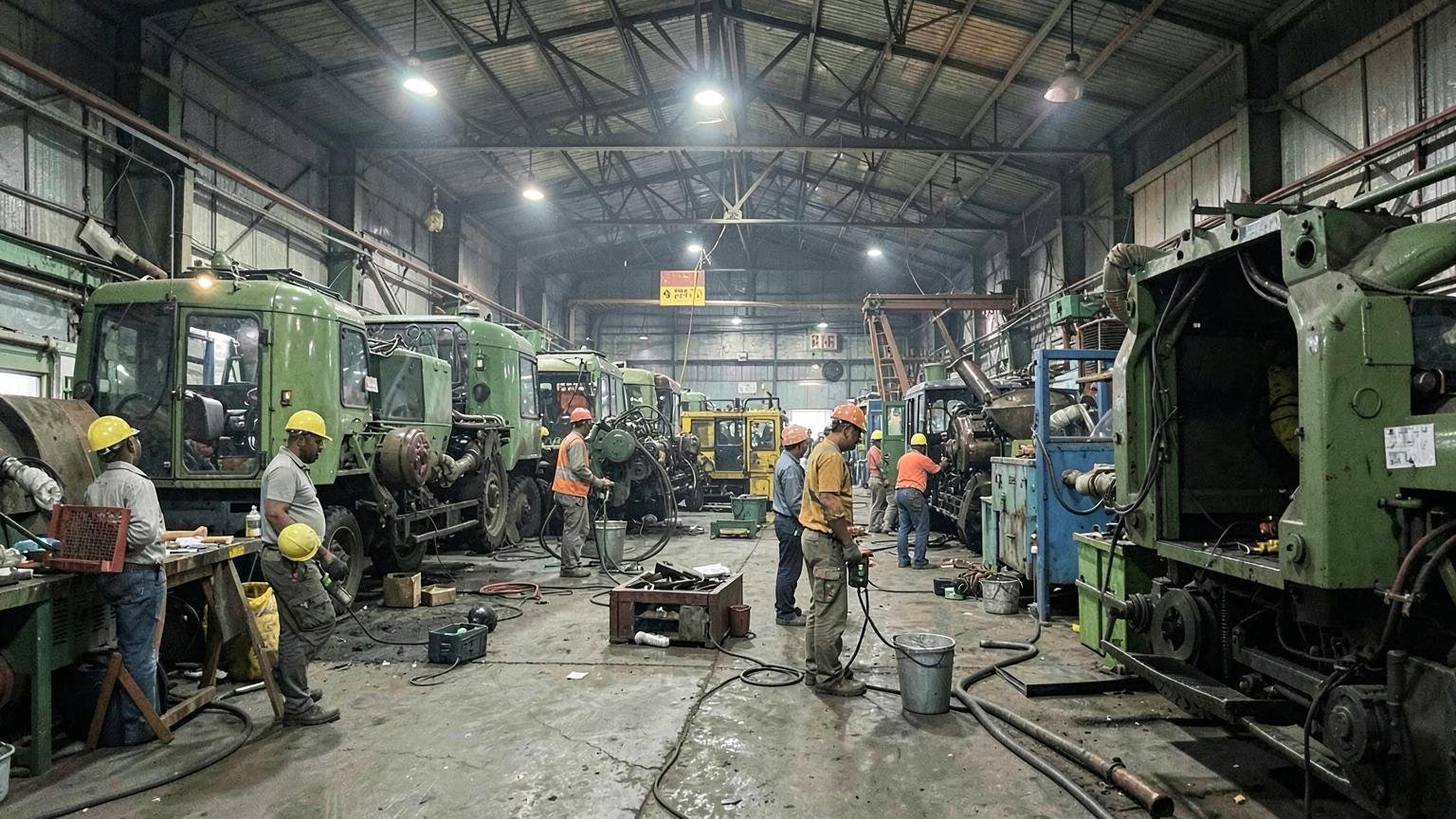
Government support for construction and infrastructure equipment manufacturing has moved from discussion to allocation. Documentation from the Press Information Bureau describes the Scheme for Enhancement of Construction and Infrastructure Equipment (CIE) with a total financial outlay of Rs 14,300 crore over seven years, with an initial provision of Rs 200 crore.
For manufacturers, the useful discipline is to separate three distinct things: what has been announced, what has been implemented, and what impact can reasonably be expected.
What has been announced
The available government material sets out the scheme's outlay and its intent: to strengthen domestic manufacturing of construction and infrastructure equipment, reduce import dependence, and improve export competitiveness. The same documentation places the domestic CIE market at approximately Rs 1.03 lakh crore and notes significant import dependence. A parliamentary committee has recommended time-bound operationalisation of the scheme - a recommendation that in itself indicates implementation detail was still being worked through.
Reuters reported in August 2026 on an incentive plan for high-value construction and infrastructure equipment. That reporting should be treated as a secondary indication of direction, not as a description of final approved guidelines.
What has not yet been settled publicly
Eligibility thresholds, domestic value-addition requirements, product coverage, disbursement mechanics and the treatment of joint ventures with foreign technology partners are the provisions that will determine who benefits. ISPT will not speculate on values that have not been published. Manufacturers should assume nothing until scheme guidelines are notified.
Industry context
Incentive schemes in other sectors offer a consistent lesson: the design of the value-addition calculation matters more than the headline outlay. A scheme that measures value addition at the machine level rewards assembly; one that measures it at the component level builds a supply chain. That single design choice will decide whether Rs 14,300 crore deepens Indian manufacturing or simply subsidises existing production.
What it means for manufacturers
OEMs should be preparing documentation now: bill-of-material mapping, supplier origin records, and a credible localisation roadmap. Schemes of this type typically require verifiable data rather than declarations, and the companies that qualify early are usually those that already track component origin rigorously.
What it means for importers and component suppliers
Component manufacturers are potentially the largest beneficiaries if the scheme reaches beyond finished equipment. Importers should model scenarios in which duty structures or incentive-linked sourcing preferences alter their customers' procurement decisions - and consider whether local assembly or partnership becomes commercially rational.
What it means for parts and the aftermarket
Aftermarket supply is rarely the primary target of manufacturing incentives, but it is affected indirectly. Deeper domestic component manufacturing shortens replacement-part lead times and creates a base of qualified suppliers capable of serving both production and aftermarket demand.
What to watch next
Watch for the notification of scheme guidelines, the definition of domestic value addition, the list of covered equipment and component categories, and the disbursement timeline. Until those are public, the scheme is a commitment rather than a mechanism.
Editorial view
A seven-year outlay signals seriousness. Industrial outcomes, however, are produced by scheme design and administrative speed, not by allocation size. The parliamentary recommendation for time-bound operationalisation is the most instructive line in the record so far.
**Sources: Official company releases, government publications, industry associations and verified business media. This article is independently written by ISPT based on publicly available information and cited sources.**
Sources & references
- Press Information Bureau, Government of India · Government · 2026
- Reuters · News agency · 2026-08-21
Industry Briefings
India Brief and Global Brief, straight to your inbox
Daily intelligence on manufacturers, importers, parts, policy and markets for senior industry professionals.