
Export Analysis
India's Construction Equipment Export Story Is Getting Bigger
Exports rose 31.5% in FY26 and the industry expects similar growth this year. The harder question is whether the parts and service network can follow the machines.
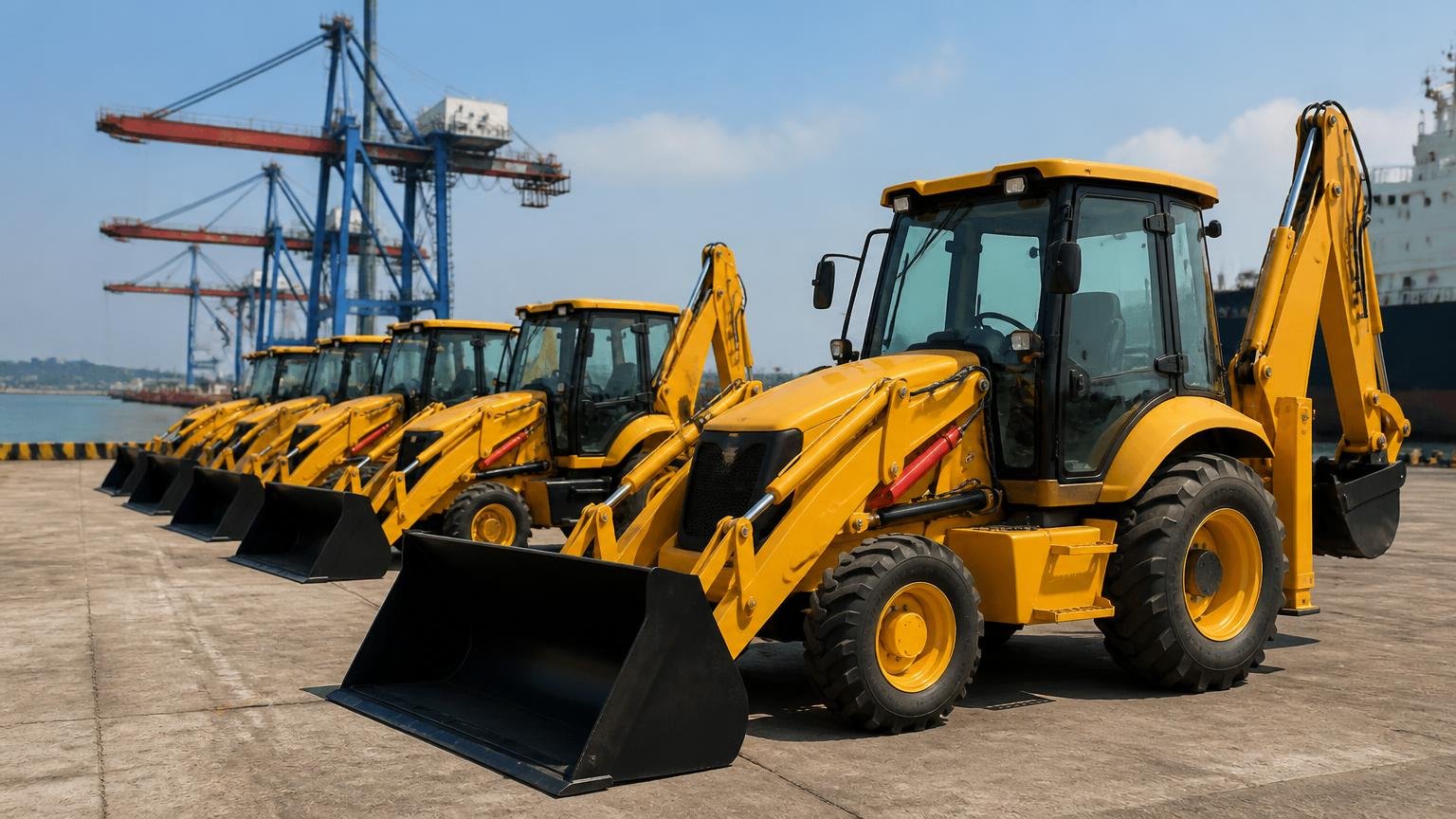
While domestic equipment sales contracted in FY26, exports moved decisively in the opposite direction. According to figures reported by Business Standard, construction equipment exports rose 31.5% to 17,394 units in FY26, and the industry expects export growth of roughly 30% in FY27.
What is changing
Export growth of this order, sustained across two years, indicates something more than opportunistic shipment. It suggests Indian manufacturers are winning repeat business on cost, specification and delivery in markets where price sensitivity and operating conditions align with Indian product design.
ISPT will not attribute specific volumes to specific destination markets beyond what published sources support. What can be said is that Indian equipment has historically found demand in markets with comparable duty cycles, service infrastructure and price expectations.
Industry context
Three factors support the trend. First, Indian manufacturing cost remains competitive for mid-range equipment. Second, capacity built for a large domestic market can be redirected to export when domestic demand softens - which is precisely what FY26 demonstrated. Third, the emission-standard upgrade has moved Indian machines closer to specifications acceptable in regulated markets.
The counter-pressures are equally real: freight cost and availability, tariff and trade-policy movement, certification requirements that differ by market, and competition from established exporters.
What it means for manufacturers
Export volume is easier to win than export position. Manufacturers that treat exports as surplus-capacity absorption tend to see volumes swing with domestic demand. Those that build dealer networks, hold parts stock in-market and train local technicians build a business that survives the next domestic upturn.
Product adaptation matters too. Ambient temperature, fuel quality, operator skill and application intensity differ materially by market, and machines that ignore those differences generate warranty cost.
What it means for importers and distributors
For distributors in destination markets, Indian equipment offers an attractive price-to-capability position, provided parts support is credible. The distributor's first question is almost never about the machine; it is about how quickly a hydraulic pump can be delivered when one fails.
What it means for parts and the aftermarket
This is the weakest link in India's export story and its clearest opportunity. Every exported machine creates a decade of parts demand in a market where Indian suppliers frequently have no presence. Regional warehousing, distributor appointment, digital catalogues and cross-reference data are the practical requirements.
Indian component manufacturers should regard exported Indian machines as a captive addressable market that is currently being served, in part, by others.
What to watch next
Watch whether export growth holds as domestic demand recovers, whether Indian OEMs establish overseas parts distribution, and how trade policy and tariff movement affect competitiveness in individual markets.
Editorial view
Two years of strong export growth is a trend, not yet a position. The industry converts one into the other by following its machines with parts, service and people.
**Sources: Official company releases, government publications, industry associations and verified business media. This article is independently written by ISPT based on publicly available information and cited sources.**
Sources & references
- Business Standard · Business publication · 2026-09-01
Industry Briefings
India Brief and Global Brief, straight to your inbox
Daily intelligence on manufacturers, importers, parts, policy and markets for senior industry professionals.