
Industry Analysis
India's Construction Equipment Industry Raises FY27 Growth Outlook to 9-12%
Stronger infrastructure execution has lifted the sector's domestic forecast - but the more durable story sits in the component and spare-parts supply chain.
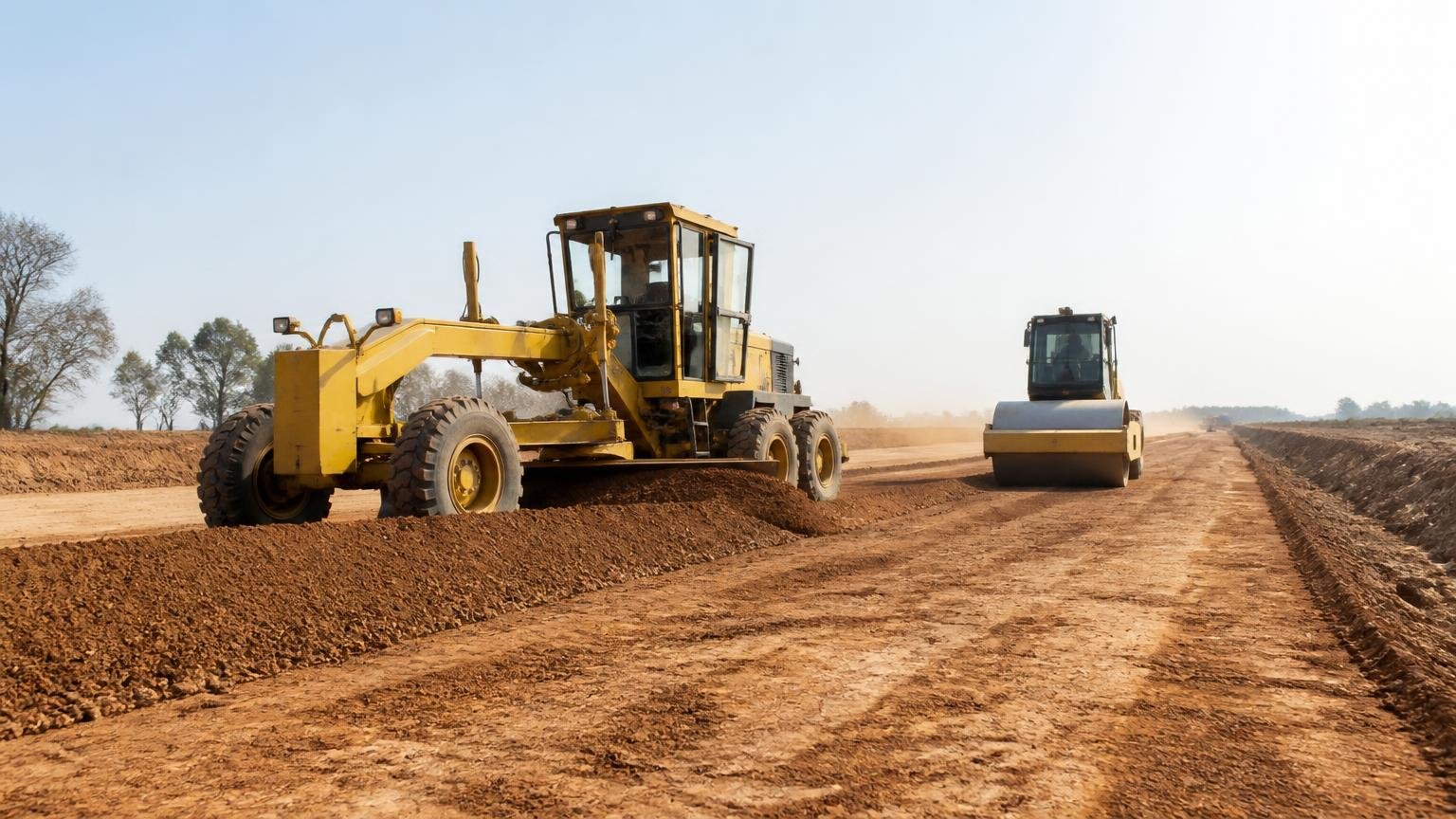
India's construction equipment industry has revised its outlook for the current financial year upwards, in a shift that says as much about project execution on the ground as it does about machine sales.
According to a Business Standard report dated 1 September 2026, the industry has raised its FY27 domestic sales growth forecast to 9-12%, up from an earlier expectation of around 7%. The revision follows a difficult FY26, in which domestic sales declined 6.7% to 113,229 units, while exports rose 31.5% to 17,394 units.
What is changing
Two movements are running in opposite directions. Domestic volumes contracted through FY26 as project awards and disbursements moved slowly and as equipment prices absorbed the cost of tighter emission norms. Exports, by contrast, grew at a pace that few in the sector expected, and the industry expects export growth of roughly 30% again in FY27.
The upgraded domestic forecast is attributed largely to improved execution of infrastructure projects in several states. Execution, not announcement, is the variable that converts public capital expenditure into machine hours - and machine hours into parts consumption.
Industry context
The Indian equipment market has spent two years absorbing a series of cost shocks: emission-standard transition, steel and input-cost inflation, and higher financing costs. Industry executives quoted in the same reporting have pointed to continued dependence on imported control valves, electronic control units and hydraulic components, all of which sit at the higher end of the value chain.
That combination - rising volumes with an imported technology core - defines the structural question facing the sector.
What it means for manufacturers
For OEMs, a 9-12% domestic growth band supports capacity utilisation without requiring aggressive new investment. The more consequential decision is where to place engineering effort. Manufacturers that use this cycle to qualify domestic suppliers for hydraulics and electronics will carry a cost and lead-time advantage into the next downturn.
What it means for importers
Importers and authorised distributors of high-technology components are not being displaced by this cycle; they are being made more visible. Demand for control valves, sensors and electronic modules rises with output. The importers likely to benefit most are those that can offer technical support, calibration and application engineering rather than supply alone.
What it means for parts and the aftermarket
Every unit sold today becomes aftermarket demand for the next decade. A machine population that grew 31.5% on the export side also creates parts demand outside India, in markets where Indian suppliers have limited distribution today. Filters, undercarriage, seals, hoses and wear parts are the natural first wave; hydraulic and electronic components follow only where quality certification and traceability are in place.
What to watch next
Three indicators will show whether the revised forecast holds: the pace of state-level project execution through the second half of the year, input-cost movement, and any measurable shift in the import share of hydraulic and electronic components. The third is the one that changes the industry's structure rather than its quarter.
Editorial view
A stronger sales forecast is welcome, but it is not by itself an industrial achievement. India's opportunity in this cycle is to convert equipment demand into component capability. That is a slower story than unit growth, and a far more valuable one.
**Sources: Official company releases, government publications, industry associations and verified business media. This article is independently written by ISPT based on publicly available information and cited sources.**
Sources & references
- Business Standard · Business publication · 2026-09-01
Industry Briefings
India Brief and Global Brief, straight to your inbox
Daily intelligence on manufacturers, importers, parts, policy and markets for senior industry professionals.