Strategic Industry Analysis
From Equipment Importer to Global Manufacturing Platform: Can India Make the Shift?
India has the demand base and an expanding export record. The transition still depends on component depth, engineering capability and consistent quality at scale.
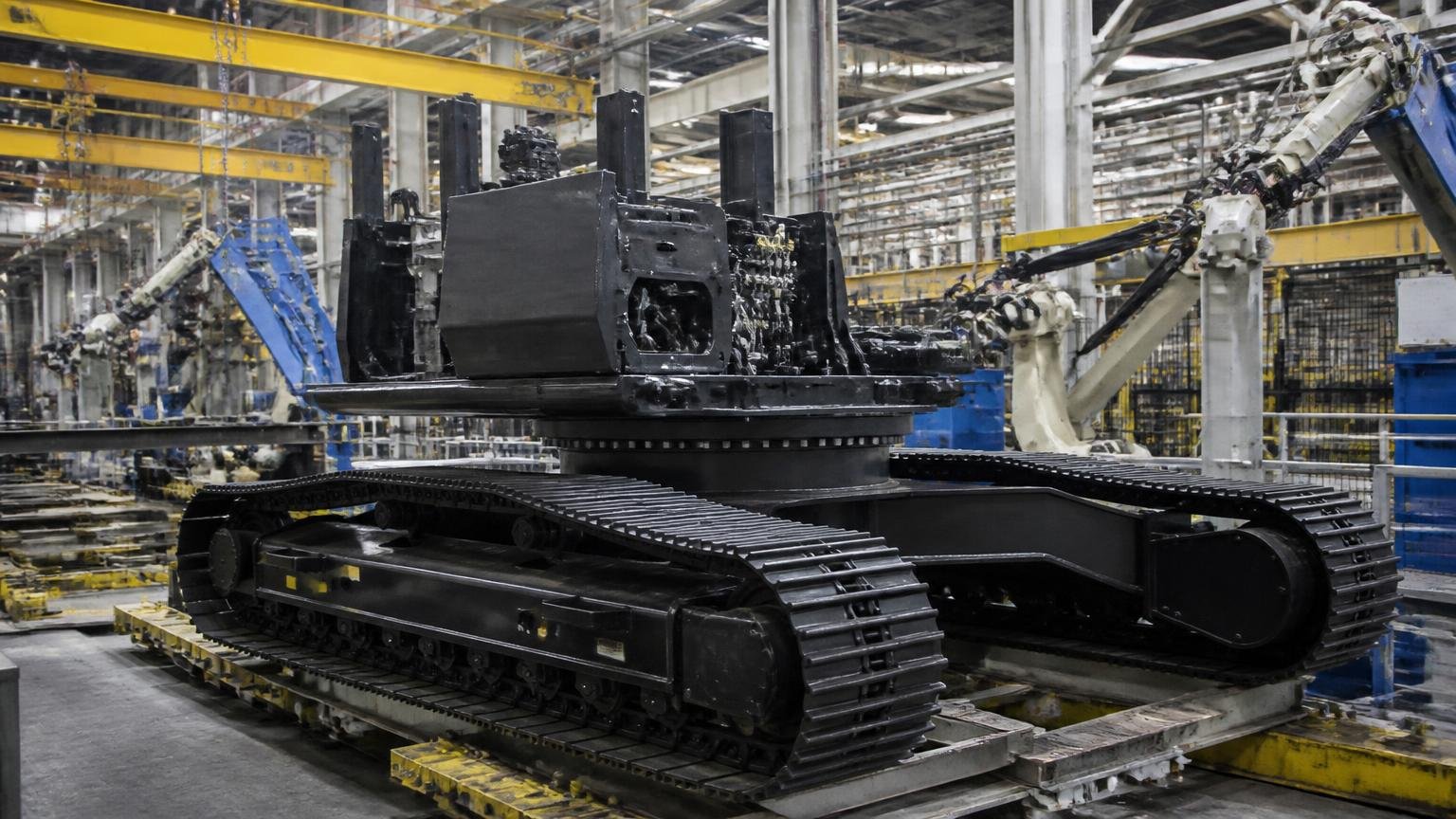
The idea that India could become a global manufacturing base for construction and mining equipment is no longer unreasonable. It is also not yet complete. Both statements need to be held at once.
What is changing
Export performance is the clearest evidence of movement. Industry data reported by Business Standard shows construction equipment exports rose 31.5% in FY26 to 17,394 units, with the industry expecting growth of roughly 30% again in FY27. Domestic demand, supported by infrastructure execution, provides the volume base that makes export-oriented capacity viable.
Industry context
Manufacturing platforms are built on four things: a large home market, competitive cost, a component ecosystem, and engineering capability. India has the first two comfortably. The third is developing unevenly - strong in castings, forgings, fabrication and structural components; weaker in hydraulics, electronics and control systems. The fourth is improving, aided by the depth of India's automotive engineering talent, which increasingly transfers into off-highway applications.
The transition also depends on factors outside manufacturing: port and logistics efficiency, certification for destination markets, and the availability of financing for buyers in export markets.
What it means for manufacturers
For OEMs, the export question is rarely about the machine and often about everything around it. Parts availability, service coverage, operator training and warranty support determine repeat purchase in Africa, Southeast Asia and Latin America. Manufacturers exporting without an aftermarket plan tend to secure one order and lose the second.
Emission and safety compliance is the second gate. Machines engineered for tighter standards travel more easily to regulated markets, which is why India's emission transition has strategic value beyond compliance.
What it means for importers and suppliers
A stronger Indian manufacturing base changes what importers import. Complete machine imports may plateau in categories where domestic production is competitive, while imports of specialised components, testing equipment and production machinery increase. Suppliers who anticipate that shift position themselves early.
What it means for parts and the aftermarket
Exported machines create an offshore parts population that Indian suppliers are, at present, poorly positioned to serve. Regional warehousing, distributor appointment and digital parts catalogues are the practical constraints. This is arguably the single largest untapped commercial opportunity attached to India's export growth.
What to watch next
Three markers matter: whether export growth persists beyond two strong years, whether component exports grow alongside machine exports, and whether Indian manufacturers begin establishing parts distribution outside India.
Editorial view
India is not yet a global manufacturing platform for heavy equipment. It is a large domestic market with a credible and fast-improving export capability, and with an identifiable set of gaps. Naming those gaps precisely is more useful than declaring the transition complete.
**Sources: Official company releases, government publications, industry associations and verified business media. This article is independently written by ISPT based on publicly available information and cited sources.**
Sources & references
- Business Standard · Business publication · 2026-09-01
Industry Briefings
India Brief and Global Brief, straight to your inbox
Daily intelligence on manufacturers, importers, parts, policy and markets for senior industry professionals.