
Editorial Analysis
India's Next Growth Engine: Equipment, Components and the Aftermarket
The flagship ISPT analysis: India's heavy equipment opportunity is not simply to build more machines, but to build the industrial ecosystem around them.
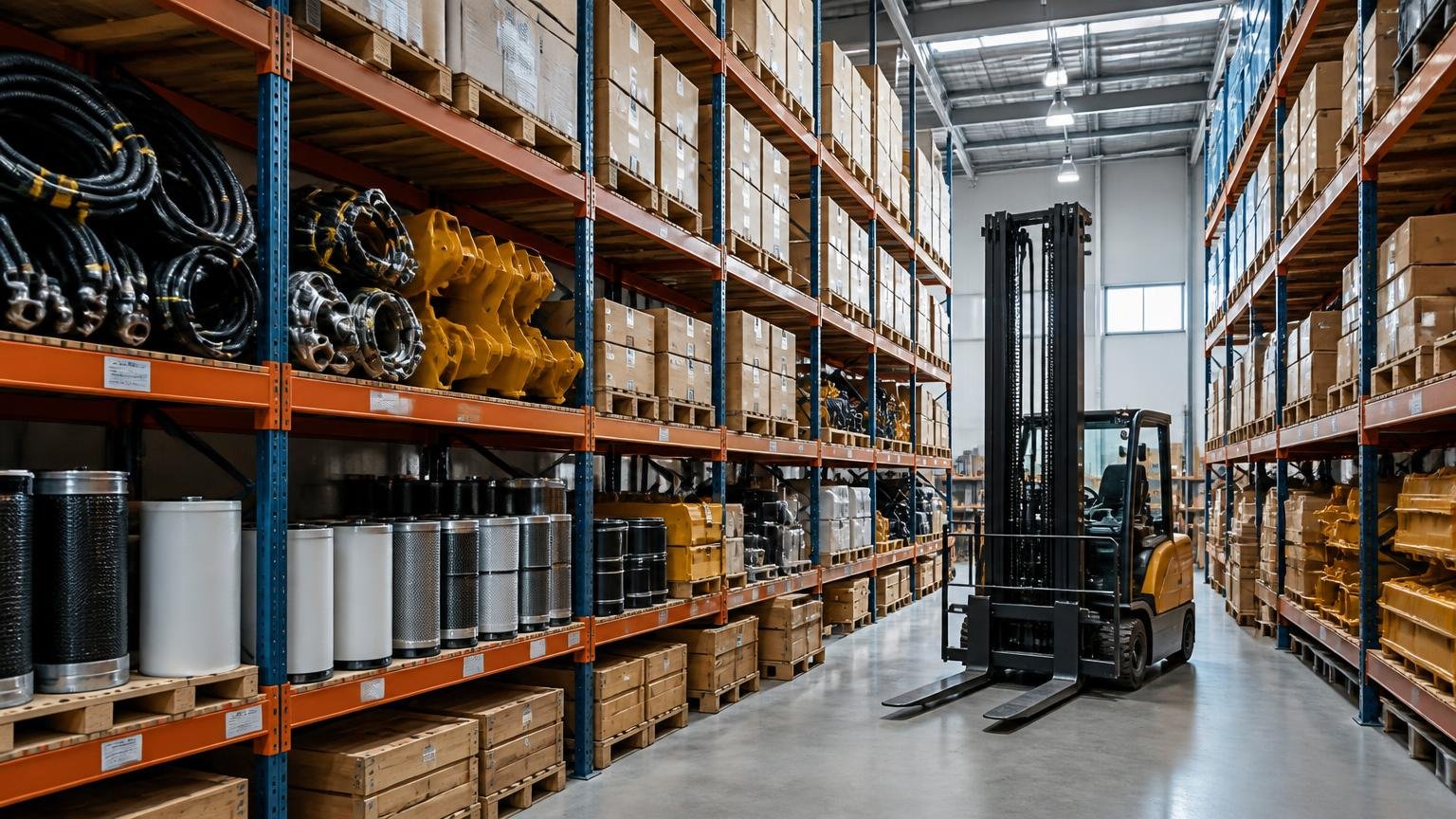
Read the current data on India's heavy equipment sector in isolation and it produces a mixed picture. Read it together and a clearer argument emerges.
The picture in aggregate
Domestic construction equipment sales fell 6.7% in FY26 to 113,229 units, while exports rose 31.5% to 17,394 units, according to figures reported by Business Standard. The industry has since raised its FY27 domestic growth forecast to 9-12%, citing improved infrastructure execution, and expects around 30% export growth. Government documentation describes a Scheme for Enhancement of Construction and Infrastructure Equipment with an outlay of Rs 14,300 crore over seven years, alongside acknowledged import dependence in a domestic market estimated at about Rs 1.03 lakh crore.
Demand is recovering. Exports are growing. Policy support has been allocated. Import dependence in high-value components persists.
The pattern beneath the numbers
Each of those facts points to the same underlying reality: India has built an equipment industry faster than it has built the ecosystem that industry requires.
Assembly capability is strong. Structural and mechanical component capability is strong. Hydraulic, electronic and control-system capability is developing. Aftermarket infrastructure - parts availability, catalogue data, service networks, technician skills - lags all of the above, both domestically and in the export markets Indian machines now reach.
What it means for manufacturers
The strategic priority is depth rather than volume. Every OEM has a localisation roadmap; the differentiator is how far up the technology stack that roadmap goes and how seriously supplier engineering is funded. Manufacturers building export product lines on emission-compliant platforms, supported by real parts distribution, will hold positions that competitors cannot buy quickly.
What it means for importers
Importers remain essential and will remain so. Their role is shifting from arbitrage to capability - technical support, calibration, diagnostics, inventory intelligence, and increasingly, partnership with manufacturers establishing Indian production. The importers most exposed are those competing purely on landed price.
What it means for parts and the aftermarket
The aftermarket is where India's advantage is least developed and most winnable. It requires no new factory in many categories - it requires certification, catalogue discipline, distribution reach and protection against counterfeit supply. Indian machines operating in Africa, Southeast Asia and Latin America represent parts demand that Indian suppliers are largely not serving today.
What to watch next
Four indicators will tell the story over the next two years: the notification and design of the CIE scheme's value-addition rules; whether component exports grow alongside machine exports; whether Indian suppliers secure OEM approvals in hydraulics and electronics; and whether organised parts distribution emerges at scale.
Editorial conclusion
India does not need to prove it can manufacture machines. It has done that. The unfinished work is the ecosystem: the components inside the machine, the parts that keep it running, the data that identifies those parts, and the service network that installs them.
Building more machines grows an industry. Building the ecosystem around them creates one that lasts.
**Sources: Official company releases, government publications, industry associations and verified business media. This article is independently written by ISPT based on publicly available information and cited sources.**
Sources & references
- Business Standard · Business publication · 2026-09-01
- Press Information Bureau, Government of India · Government · 2026
Industry Briefings
India Brief and Global Brief, straight to your inbox
Daily intelligence on manufacturers, importers, parts, policy and markets for senior industry professionals.